Phone: 13998888889
Email: 8888888@qq.com

AI Reshaping the Medical Landscape! The Eight Breakers on the Billion Dollar Track!
2025-11-07 14:09:34
155
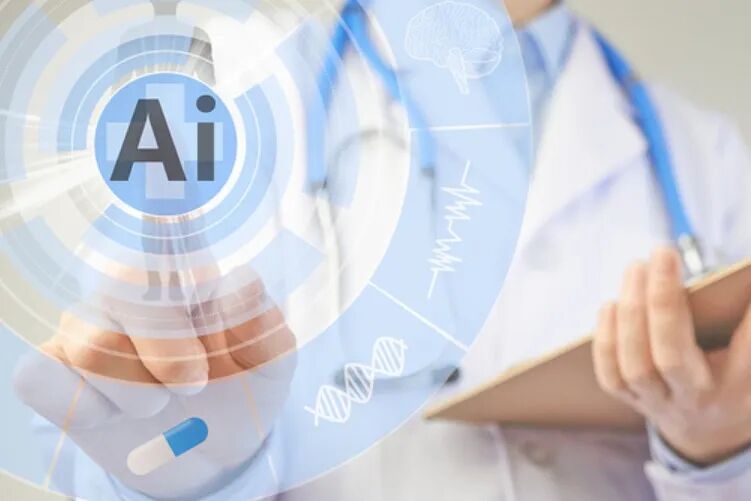
As the wave of artificial intelligence sweeps across the global industry, the healthcare sector is undergoing a profound 'smart revolution'. From the laboratory of new drug development to the diagnosis and treatment desk of grassroots hospitals, AI technology is breaking through the efficiency bottleneck and resource barriers of traditional medicine, especially in the field of innovative drugs, giving birth to a golden opportunity worth billions of dollars. The explosive power of this transformation has long been foreseen by the market: McKinsey predicts that the AI driven pharmaceutical research and development market will exceed $100 billion by 2030, and if full chain penetration is achieved, the potential space will soar to $280-530 billion. In the Chinese market, the growth curve of this track is also steep - according to data from Everbright Securities, the scale of China's AI+medical market has reached 31.5 billion yuan in 2023, and is expected to exceed 80 billion yuan by 2025, with a compound annual growth rate of 58.3%. The policy has accelerated the takeoff of the industry. The 14th Five Year Plan clearly lists AI healthcare as a strategic direction, with a 33% reduction in the approval cycle for medical AI three types of certificates by 2024, and the addition of 12 AI diagnosis and treatment services to the medical insurance catalog, clearing key obstacles to the commercialization of technology. In this industry sweeping transformation, eight Chinese companies have stood out with their hardcore technology and landing capabilities, becoming the core force in rewriting the medical landscape. 1、 Rise of the track: How can AI reshape the healthcare ecosystem? (1) The transformation from "auxiliary tools" to "core engines" has long been constrained by three major pain points in the traditional healthcare industry: a new drug development cycle of up to 10 years, a shortage of primary healthcare resources, and difficulty in improving diagnosis and treatment efficiency. The intervention of AI technology is systematically solving these problems: at the technical level, the accuracy of large models in medical image analysis, electronic medical record processing and other scenarios has exceeded 90%, and the efficiency of single case processing has been improved by 3-5 times; At the industrial level, the research and development cycle of innovative drugs has been shortened by 50%, and the diagnostic and treatment capabilities of grassroots hospitals have achieved a "leapfrog upgrade" through AI assistance. The deeper significance lies in the restructuring of the industrial landscape. The field of innovative drug research and development, which was previously monopolized by giants, now allows small and medium-sized pharmaceutical companies to participate in core innovation with the compound design capabilities of AI platforms; High quality medical resources can reach remote areas beyond geographical limitations through AI remote diagnosis systems. The introduction of DeepSeek big model and localized deployment based on Ascend AI by Shengjing Hospital affiliated with China Medical University is a vivid reflection of this trend - AI has upgraded from a simple "auxiliary tool" to a "core engine" driving high-quality medical development. (2) The value explosion of the three major golden tracks in the global AI healthcare market is mainly driven by three sectors, accounting for over 60%: drug development: AI runs through the entire process of target discovery, compound design, and clinical trials, significantly reducing research and development costs and failure risks; Imaging diagnosis: Medical imaging AI has covered multiple diseases such as lung cancer and cervical cancer, and its penetration rate in primary hospitals is rapidly increasing; Health management: AI wearable devices and chronic disease management systems enable early screening and continuous monitoring of diseases, restructuring the health management model. The outbreak of these three major tracks together constitutes the "long slope and thick snow" of the AI medical industry, and also provides a clear growth path for enterprises. 2、 Benchmarking Sword: The Breakthrough Path of Eight Major Enterprises (1) Innovative Drug Research and Development: AI Driven "Acceleration Revolution" 1 WuXi AppTec: The "Intelligent Engine" for New Drug Development As a pharmaceutical research and development service giant, WuXi AppTec has redefined the innovative drug development process through the Chemistry42 intelligent platform. This platform integrates over 6.5 million compound databases and utilizes AI algorithms to achieve intelligent design and optimization of compounds, shortening the traditional lead compound discovery process that takes years to months. In the first half of 2025, its AI related orders surged by 317%. The anti fibrotic new drug developed with AI assistance has entered phase III clinical trials and is expected to become the first heavyweight drug developed and approved under AI leadership. (2) Precision diagnosis and treatment: AI empowered 'golden eyes' 2 Berry Gene: The "intelligent decoder" of genetic testing, in collaboration with Huawei, has created a large-scale tumor gene model, enabling Berry Gene to achieve breakthroughs in the field of early screening for lung cancer. Its core product "Berrianke" optimizes gene sequence interpretation through AI algorithms, increasing report generation efficiency by 5 times and sensitivity up to 95%, accurately identifying early lung cancer lesions. At present, the testing service has covered 2000 hospitals. In the first half of 2025, the AI business revenue will increase by 16.3%, and the gross profit margin will approach 50%, which confirms the commercial value of the technology. 3. Jinyu Medicine: The "unmanned breakthrough" in pathological diagnosis. Jinyu Medicine's "black light laboratory" has overturned the traditional pathological detection mode. Its cervical cancer AI screening model will increase detection efficiency by 5 times, reduce error rates by 15%, achieve 24-hour unmanned continuous operation, and significantly reduce labor costs. The self-developed large-scale model "Small Domain Medicine" further extends its service boundaries, processing an average of 100000 diagnosis and treatment needs per month, becoming an "intelligent bridge" connecting laboratories and clinical practice. (3) Smart Healthcare: Refactoring the Diagnosis and Treatment Service System 4 Weining Health: The "builder" of hospital AI ecology. Weining Health's core competitiveness lies in creating a complete closed loop of "model+system+ecology". Our self-developed medical model WiNGPT is embedded in the WiNEX system, which enables intelligent analysis of electronic medical records and assisted generation of diagnosis and treatment plans in 6000 hospitals. Its innovative "AI+insurance" profit sharing model is more breakthrough, and has been implemented in more than 50 tertiary hospitals. Through AI optimization of medical insurance payment efficiency, the annual revenue increase of a single hospital's AI business exceeds 20 million yuan, achieving a win-win situation for hospitals, insurance companies, and enterprises. 5. Lianying Medical: The "AI value-added password" for high-end devices. Lianying Medical's uAI 3.0 platform demonstrates the value reshaping of AI on medical equipment. This platform not only won the bid for the 4.5 billion yuan "Thousand County Project" of the National Health Commission, covering 800 tertiary hospitals, but also achieved continuous monetization through software subscription models. In the first half of 2025, software subscription revenue surged by 120% year-on-year, breaking the traditional profit model of "selling medical equipment at once". AI technology has upgraded high-end medical equipment from "hardware products" to "continuous services", verifying its strong monetization ability. 6. Mindray Medical: The "benchmark for AI going global" in the global market. Mindray Medical deeply integrates AI into hardware devices, building differentiated competitiveness. The "Qiyuan Big Model" empowers monitors and ultrasound equipment, among which the AI electrocardiogram platform has obtained FDA certification with a detection rate of up to 98.7%; The AI diagnostic accuracy of ultra high end ultrasound has increased by 15%, becoming a "diagnostic tool" for grassroots hospitals. The technological advantage has been transformed into market share, with global sales of wearable electrocardiographs exceeding 2 million units and overseas revenue accounting for over 60%, making it a representative of China's medical AI going global. 7. Lepu Medical: An "Intelligent Guardian" in the cardiovascular field, Lepu Medical focuses on the cardiovascular subdivision track and uses AI to create a full chain solution. Its FDA certified AI electrocardiogram platform can quickly identify arrhythmias, and the heart valve evaluation system has an accuracy rate of 92% in predicting the risk of complications, providing accurate decision support for cardiologists. By 2025, the proportion of AI business revenue in the company will soar to 22%, and the remote diagnosis center jointly built with Ping An Health has served over 3 million users, forming an ecological loop of "equipment+service+data". 8. Runda Medical: The "Inclusive AI Ambassador" of primary healthcare. Runda Medical has developed a universal AI healthcare system based on Huawei's Pangu model, which accurately addresses the pain points of primary healthcare. The system supports intelligent interpretation of test results and auxiliary diagnosis of common diseases, helping grassroots hospitals improve diagnosis and treatment accuracy. With the continuous improvement of the coverage of grassroots smart hospital solutions, the company's market value has exceeded 10.6 billion yuan by 2025, proving the commercial potential of "inclusive AI" with technological strength. 3、 Value Reconstruction: Valuation Logic and Future of Medical AI (Part 1) The Transformation from "Technology Valuation" to "Landing Valuation": The Capital Market's Valuation Logic for Medical AI Enterprises is undergoing profound changes. In the early days, the market focused more on technical parameters and R&D investment, but now it focuses on three core indicators: scene implementation scale, commercial monetization ability, and customer renewal rate. The surge in AI orders from WuXi AppTec and the surge in subscription revenue from Lianying Medical are typical manifestations of the new valuation logic - what the market truly recognizes are companies that can transform technology into sustained revenue. This logic is highly consistent with the AI enterprise application track. Just as Palantir achieved a valuation of 564 times with its landing capability, the value of medical AI enterprises ultimately needs to be verified through hard indicators such as hospital coverage, revenue growth rate, and gross profit margin. Nearly 50% of Berry Gene's AI business gross profit margin and Weining Health's ability to increase revenue by 20 million yuan per hospital have become the core support for its valuation premium. (2) Future battlefield: competition between technological depth and ecological breadth. Looking forward to the future, the competition in the medical AI industry will focus on two dimensions: technological depth: moving from general scenarios to specialized and innovative fields, such as Lepu Medical's deep cultivation in the cardiovascular field and Berry Gene's focus on tumor gene testing. Technological barriers will continue to rise; Ecological breadth: A single technology is difficult to form a moat, and building an ecosystem of "hardware+software+services+data" has become the key. The AI ecosystem of Weining Health's hospital and the AI integration of Mindray Medical's equipment are typical cases. As the global market size approaches $1.5 trillion by 2030, Chinese companies are expected to occupy an important position in this global competition with their scene advantages and policy support. Conclusion: The ultimate value of AI healthcare is "putting life first". From the laboratory of WuXi AppTec to the "black light laboratory" of Jinyu Medicine, from the AI diagnosis and treatment system of tertiary hospitals to the universal healthcare platform at the grassroots level, AI is using technological power to bring high-quality medical resources closer to ordinary people. The ultimate significance of this transformation is not only the improvement of industrial efficiency and the explosion of commercial value, but also the technological practice of the "life first" concept. On the golden track with a growth rate of 58.3%, those enterprises that can deeply cultivate the technological core and adhere to the essence of healthcare will eventually become industry leaders. The story of AI healthcare in China has just begun, and the future is promising.
Disclaimer: Source: F Investment Bank. This article is for reference only and does not constitute any application recommendations. If the content involves copyright or other issues, please contact this official account in time, and we will deal with it at the first time.
Latest articles
Akıllı sağlık neden bir zamanlar olacak?
160
2025-12-09



The efficacy and function of human stem cells
185
2025-09-18

